A Blog from Ballincollig, Co. Cork A blog containing the (sometimes random) thoughts, ideas, sermons & questions of the Church of Ireland Rector
Tuesday, March 03, 2009
More Regular Blogger ...
Sunday, March 01, 2009
Hospitals in Mission
Well it is for St. Francis hospital in SE Zambia.
A freind who knows the hospital well commented on a recent email
| St. Francis is the largest and best Mission Hospital in Zambia, and
| > often takes both Irish and British medical students on their electives
| > as well as one or two who have already qualified. We met one delightful
| > young lady from Galway on our way through Lusaka who was on her way for
| > a second stint at the hospital having served a short elective there and
| > now returning as a qualified doctor. It serves a *huge* area, and
| > provides a reliable and effective emergency take in service as well as a
| > wide variety of routine health services for what is, even for Zambia, a
| > remote rural area. James Cairns, a Third Order Franciscan, was surgeon
| > there for many years together with his wife Faith, and I had the honour
| > of meeting them last year. Right now the hospital is run by a very nice
| > English couple whose kids were at school with our two. The hospital also
| > acts as a teaching base for nurses, building skills and capacity for
| > Zambia's desperately needy health service and there is a CMS sponsored
| > nurse-midwife tutor.
Details on St. Francis Hospital can be found ...
http://www.saintfrancishospital.net/ (Their website)
http://www.uspg.org.uk/article.php?article_id=367 (The USPG project we are supporting)
Also this question got me thinking about CMS Ireland and the hospital I have seen as part of my trips out there ... Kiwoko Hospital in Luwerro Diocese which is doing some absolutely amazing work with the community.
Details of that hospital can be found here
For those who are interested in helping our appeal cheques (made payable to USPG Ireland) for the hair cutting can be sent to me - Robert Ferris, CITI, Braemor Park Dublin 14.
Thursday, February 26, 2009
Busy - ness and mission
Tuesday, February 24, 2009
Nearly Live Pictures
Monday, February 23, 2009
Lenten Appeal ... Head Shave
Photo's Courtesy of Lesley Trennier
Written by Patsy McGarry
IN WHAT has to be among the more unusual Lenten gestures, students preparing for the ministry at the Church of Ireland Theological Institute in Dublin are planning a mass hair loss for Shrove Tuesday.
Or “Shave Tuesday”, as they have renamed it.
Tomorrow afternoon six will have their heads shaved and others will have their legs waxed, for charity.
In turn they are appealing to every parish throughout the Church of Ireland to collect at least €1 from each parishioner during Lent.
The proceeds will go to the St Francis’s Hospital in Zambia, through the Anglican Mission Agency, USPG (United Society for the Propagation of the Gospel).
“Lent is quite properly a penitential season. But that doesn’t mean we can’t have some fun with it while doing some good for others,” suggested group “Hair-Loss” organiser Patrick Burke, a final year student at the institute.
“Shaving one’s head is a traditional way of doing penance. Doing it with a bunch of friends in front of your colleagues and teachers is a bit of a laugh. And doing it for a worthy cause is the best of both worlds.”
The Church-run St Francis’s Hospital in Katete is the only source of healthcare for a large rural population in Eastern Zambia.
Malaria, Aids and TB have decimated the working population of the area and have left many orphans in a place where most people live at subsistence levels.
“It’s a very simple idea,” said Patrick. “If one or two people in each parish simply take up a collection and send it on, a lot of money could be raised for a really good cause very easily.”
Similar things have appeared on the church of ireland website
If you would like to support us please do! - I will be taking pledges ... Just leave your name and amount as a comment to this article and I'll get the money somehow!
Robert
Failing that you can also donate online ... www.justgiving.com/robertferris
Sunday, February 22, 2009
Welcomed to St. Columba's
It was all pretty relaxed.
John asked me to introduce myself at the 8:15 Holy communion and then mum, dad and I headed back for breakfast at the Rectory which as great. It was quite funny at breakfast when john was commenting that he had read on the church of ireland website that ordinands were getting their heads shaved for charity and the proceeded to ask me if I was ... to which I replied I was... but hadn't told mum and dad about it ... hehehe
:-)
Oh yes ... the head shaving is taking place on Tuesday night ... the charity is USPG who are helping a hospital in sw Zambia a very worthwhile cause run by the anglican church. I encountered the guy who was responsible for setting it up on my last trip to Zambia at St. Johns Seminary. A great guy!
so it is now all systems go as I am in transit towards Monaghan. where I am preaching tonight ... Sermon will be uploaded after the service.
More Photos during the week.
Oh yes and for lent I am joinning the parishioners in St. Columbas taking part in livelent

I'll let you know how I Get on over the next few days
Monday, February 16, 2009
More than halfway through February ... a summary blog
... In College ...Essays are being written, my to-do list is growing by the day
Essays for Ethics, Anglicanism, OT, Sermon for Exegesis, NT Cosmology, Theological refelction 10,000 word project as well as loads of college stuff
as well as services in Chapel and the odd lecture to go to!
... Out of college ... I am looking forward to being introduced to St. Columba's this sunday morning at both of their services and then preaching at St. Patrick's Monaghan on Sunday Night.
... around about ... Absolutely raving about the new disney movie "Bolt" its great. Really entertaining - laughs galore - but also soo much theological content.
Oh yes, and for any friends reading the blog - I have recieved confirmation that my ordination is on Sunday 21st June in Hillsborough parish
Monday, February 02, 2009
Curacy Round!

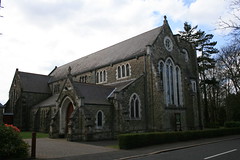
St Columba's Church, Knock
Well, it is quite offical now - It has been announced in Church - I am delighted to be off in June to St Columba's Knock, as Curate Assistant.
Over the course of the next few months I will keep the Blog informed of the developments.
I look forward to getting to know the church family in the east of Belfast.
Robert.
Photo "borrowed" from Gary McMurray
Sermon - Letter to Philemon
Let us Pray
Heavenly Father,
We pray that as we open your word this evening, you would speak into our hearts and minds and bring us closer to you – In Jesus’ name we pray – Amen
On a personal note, before I begin could I thank Beatitudes choir for their wonderful gift of music. I look forward to meeting them again across the river in the “other diocese”! thanks to ron janice church wardens …
Over the course of this week I have been reflecting upon how messy our Christian lives can be, and how completely messy some of the things we have to deal with can be.
A couple of weeks ago down at college in Dublin , in one of classes one of my fellow students did a session on creativity and spirituality – she brought in large sheets of paper and lots of poster paints, crayons, felt tips, thick and thin paint brushes and asked us to start painting – anything we wanted. I hate painting, it always brings me back to my high school days when we had art homework!
It always ended up a mess – colours run into one another, I use broad brush strokes when I need to use fine lines, I make the wrong tone of colour – Lots of things which could go wrong went wrong when I picked up a paint brush in school. It ended in a mess!
We live in a messy world – colours are running into each other all over the place – ethical decisions, our own personal our family lives things can get quite messy. Why the mess?
Society is made up of people and People are messy full stop!
Christians then as people and members of society are not immune to this messy ness – and that is OK.
As we look at the reading this evening we see messy-ness in a difficult situation
In this letter we see Paul is writing to Philemon (who is a slave owner)
About his slave oniesimus.
It is a messy situation as it brings together all the problems associated with
• Human Relationships
• Societal Norms
• Christian Discipleship
From the outset it is quite difficult for us to know what is going on. We have only this one small window of 25 verses. We do not really know much about Philemon, or Oniesimus. We do not know why oniesimus absconded from his household, we do not know if Philemon welcomed him back.
What we can deduce from this letter is that
• Paul knows Philemon well
• Paul is currently in prision and has met onesimus
• All three characters are Christians
Philemon is in a messy situation
• He knows Paul is someone who has authority in the Christian church and needs to balance his commitment of faith
• He has a place in the society of the day – What would the other slave owners think if he lets a prisoner dictate what he should do with the slave that ran away. It would be a bad example.
• He needs to uphold justice – Justice needed to be done!
• A decision had to be made swiftly.
• Like the rest of us I am sure Philemon had other influeneces upon his life
Philemon the slave owner
Onesimus the Slave was also in a messy situation
• What would he get if he goes back – Punishment?
• Should he even try …
• What if Philemon goes mad and kills me
• Blaming himself
Then there is the third party – Paul
• He is no doubt struggling to think what should he do
• What should he be advising Onesimus to do
• What if Philemon doesn’t listen to his appeal
• Why should he be getting involved at all?
This is a very complex situation – But Paul does put pen to paper and writes a wonderful letter – great use of language to try and Iron out the situation.
Take a look at the text – in verse 4 he Thanks God for Philemon, and tells him of the reports about his love which he has heard
Paul then goes on to appeal to Philemon on the basis of Love. A couple of quite comical things here:
Take a look at verse 10 & 11
10I appeal to you for my son Onesimus,[a] who became my son while I was in chains. 11Formerly he was useless to you, but now he has become useful both to you and to me.
A great play on words here – Onesimus means Useful.
Then if we were to read on – in verse 22 – Paul is on his way.
A messy situation but things can indeed be resolved through love, through truthful words spoken in love.
When we look at this situation the common ground for all three parties is Christ. I wonder in our dealings, in our conflicts, in our messy lives do we when we are dealing with other’s generally seek reconciliation, seek to sort out the situations.
Paul does have a desire for reconciliation- he could have very easily have to onesimus to get lost!, Paul had problems of his own, this situation was not his problem. His deep love for both parties put him in an awkward position but he was prepared to stick it out and do something. He made himself vulnerable. He was between a rock and a hard place.
Lives are messy, situations which we encounter on a daily basis are messy. The God we worship here tonight is a God of transformation and reconciliation.
We all know that there are relationships which are destructive, which need to be severed. But there are also those relationships which need to be worked at, where reconciliation is possible. In practical terms, for Christians, Philemon throws up huge challenges.
For those who like Onesimus are seeking reconciliation, are seeking something to change they may need to honestly speak to someone they trust to get advice, someone they can see who has deeper insight into the situation.
For those who like Paul are in a situation where people are confiding in them, they need to be wise in their counsel and choose their words carefully so that the person may be built up and the situation resolved.
For those who are like Philemon – they need to be ready and open to accept that mistakes have been made, most likely on both parties. They need to open dialogue and be ready to draw a line under the entire situation.
Conflict is inevitable in life, in church, in society, in families however we need to identify it and learn some lessons. Wise counsel is often useful to gain another perspective on the situations we find ourselves having to deal with. Wether that be from a close friend, a member of the clergy, a professional counselor, a doctor … whoever
To return to where I started – Life is messy, paint does run but what can result can be an creative, constructive situation which can relieve so much pressure on all sides.
Wise counsel, Prayer and Listening to God need to be thrown into the mix when dealing with messy stuff to do with relationships.
In Conclusion,
I suppose what I am saying, in the messiness of life, in the complex situations we find ourselves acting out on a daily basis, wherever we find ourselves we need to find those people we can confide in, those Christians whom we respect and trust to speak truthfully into our situations.
The God we worship wants to be close to us and to be involved in our lives seeking reconciliation and peace. Creating order out of chaos.
Let us pray.
Sermon: Mark 1:21-28
This sermon was preached at 10:30 Holy Communion in St. Bartholomew's Parish Church, Stranmillis on Sunday 01 Feb 2009 on my final day of College placement
Mark 1:21-28 (New International Version)
Jesus Drives Out an Evil Spirit
21They went to
25"Be quiet!" said Jesus sternly. "Come out of him!" 26The evil spirit shook the man violently and came out of him with a shriek.
27The people were all so amazed that they asked each other, "What is this? A new teaching—and with authority! He even gives orders to evil spirits and they obey him." 28News about him spread quickly over the whole region of
Let us pray,
May the words of my mouth and the meditations of our hearts be now and always acceptable in thy sight, O Lord our strength and our redeemer – Amen
If I was to ask you to think about the word authority, what words or images come to mind, maybe a policeman, maybe a judge, perhaps a world leader, an academic maybe who is an authority in such and such a field. Your mind may be drawn to your own job if you are a supervisor or manager of people. The word authority implies decision making, responsibility and some sort of leadership role.
Over the last couple of weeks, I have been watching with much interest what has been happening in Washington D.C after the inauguration of Barack Obama. I am a fan of the west wing TV series as well as 24 both of which portray days in the life of a president in the Oval office, the successes and the failures of the American administration as they try to run the country. As well as the stresses and stains of everyday life in the positions of power.
I don’t know what it is about this American president which as captivated me, maybe it is because he is of ordinary origins – I have been reading his Biography!, maybe because he seems to be a beacon of hope for the nation, maybe its compelling that 1 man has so much power …
The man, Barack, looks and acts like a leader, someone who has authority but also someone who seems to handle this power well, he has got people around him whom he can trust and delegate that power out to. Someone who also exudes charisma and trustworthiness. Something new promised for
Our reading this morning from the gospel of Mark speaks about someone who has authority, begs various questions such
- who is Jesus ?
- Where does his authority come from?
- And what is this all about?
Over the course of the last few months, whilst I have been here in St. Bartholomews, I have joined you as we have journeyed as we do annually through what is known as ordinary time, through advent as we seek to prepare for Jesus coming as a Baby in a manger, through epiphany, his Baptism and now we are starting on Jesus’ public ministry.
Who is Jesus and how is he different from the scribes?
This may seem like a very simple and straight forward question to us as Christians today with 2,000 years of scholarship behind us. With simple creedal statements, of searching scriptures, of devotion and in our own lives our encounters with God through our own experience of the risen Lord. However we must remember that astonishment of those people in the synagogue – they knew very little about the person of Jesus, it was through his teaching that his authority was shown.
The question as to Jesus’ identity is one of the fundamental questions which Mark is concerned about throughout his gospel – he opens his book with the outrageous claim – “The beginning of the good news of Jesus Christ, the Son of God” and then the rest of the gospel asks the question again and again – who is this Jesus?
In our passage this morning – Jesus is seen as someone who is a teacher, but more than that he is a teacher who has authority over evil. There is one thing teaching that God has power over evil, but then when evil is presented before him he claims that authority and calmly commands it to go.
It is interesting that the first to recognize Jesus as “the holy one of God” is the evil spirit.
Where does such authority come from?
The short answer is from God – We see on many occasions throughout the gospel narratives Jesus claiming authority over
- Nature – events around the lake: calming of Storm, walking on water, feeding of the 5,000
- Disease – many healings
- Sin – “Your sins are forgiven”
- And in this and other cases – power over evil
- And Ultimately – Power over death.
Many miracles pointing to the coming of the kingdom and the eventual defeat of evil.
This authority comes from the Father – purely and simply. It cannot conceivably come from anywhere else
What does this mean?
This episode provides us with an insight into something which we know very little about, but an area of the created universe which there has been much rumour over the centuries. Many very scary films have picked up the themes of exorcisms, of evil portrayed in horrific detail. We also see Jesus throughout his earthly ministry confronting manifest evil in many scenes and simply telling it to leave.
Do these sort of things happen today? Rationalists over the last couple of centuries have tried to deny the existence of evil, claiming that it was down to psychological illness. However there is more to it that this – the church does recognize that there is evil in the world. We tread a middle way in talking about such matters – Lots of things which have been put down to evil in history of course have been down to what we recognize as mental illness but there are thing which are evil.
Christians who are relying on Jesus, who are living for him we have nothing to fear – why? Because Jesus is the one who has authority over evil and this power is the same as the power over sin, the same as the power he displayed over the diseases which he healed back in 1st C Palestine and he still does it today.
Take a look at the passage again – what is its emphasis?
Is it on the evil one? – no its not … its on Jesus … its on his power, his teaching and his authority. So what?
What is our focus? Are we concentrating on evil within our midst? – are we looking towards the wrong authority? There are many different foci within the world today:
- World leaders
- Money Markets
- Models
- Films
- Consoles
- Pop Stars
None of these of course are evil in themselves, however they all can become tied up with evil
However the distraction they take from the One who is the real authority is important to note. Evil is real in the world today but God is more powerful, more beautiful than anything that the Evil one may throw at us.
In our Baptism service we are asked
Do you to reject the devil and all proud rebellion against God – I reject them
Do you renounce the deceit and corruption of evil - I renounce them
Evil does not have a stronghold on the Christian – Look at the authority Jesus has – he commands the evil spirit to leave the man – and it does – just like that.
Things that rob Christians of hope do not have a stronghold over Christians either – It may seem that it does – but “whom resist steadfast in the faith”
As Christians we have to actively reject and renounce those things which are not of God.
There may be things – not evil at all – but just things which are detracting from promised life that Jesus promised which you know that you need to dump out in a spring clean (if you can do that at the start of February!)
Who is this who has the authority? – It’s Jesus Christ, It’s God’s Son It’s God’s Holy one!
Where does his authority come from? - It’s directly from our father, the creator
What is this story all about? Its about living life to the full … God has a plan for us, evil does try to throw us of the path – but evil is doomed to failure – we have to continually look to Jesus to focus our eyes on him, he is the one with authority.
We do need to be real and honest about this stuff … if there are things detracting us from the life that Jesus promised that we need to dump – DO IT!
The other thing which is quite scary is that Jesus, like the obama administration if I can draw an analogy , he has delegated power – we are ambassadors representing Jesus to the world outside, we are disciples learning what stuff Jesus has given to us to do. So we also need to be getting on with the job of spreading his word, where we are and whatever he has called us to.
In Conclusion,
Let us remind ourselves that evil does exist but our focus should never be on it as the one with the authority is Jesus.
We need to remind ourselves that in Baptism we reject, renounce and we turn to Christ.
Jesus has the authority but has given us a share in that authority as we proclaim the good news in our communities.
Let's pray
Friday, January 30, 2009
The Rollercoaster week ... that was
"Who Knows what this week will bring ..." thinking that it was to focus on the curacy round ... how wrong I was to be!
Last weekend was spent up in Belfast with Ron and Janice at Stranmillis which was great
Sunday was the longest bus journey down to dublin it took me 4 and a half hours to get from Belfast to Dublin ... which involved a bus driver taking directions from a drunk passenger who was telling him to turn right on a motorway! ....mmmm....missed last tram and had to take a strange dublin bus... anyway ...
Monday was pretty straight forward I think.
Tues was great getting home and being able to walk down Banbridge street in the middle of a week day ... how amazing that was !!!
Wed was extremely busy ... interviewing people for my dissertation and having a reunion with the scott family over dinner and then back down to dublin in the train ... it was great to have a whole carriage to myself ... good thinking time.
Thurs was crazy ... class in the morning ... rectors appearing in college in the afternoon and then the white envelopes at 3 O Clock ... agggh ...*
Out for a meal in the evening with the class to a very expensive indian! but very nice food.
I write this blog also to highlight that probably most human emotions are caught up somewhere in this week
- Joy at being placed in the curacy round
- concious of much prayer needed those who havent yet been placed
- Grief and shock at the sudden death of Uncle Colin whose funeral I will be participating in tomorrow
- Praying for healing for a friend and fellow Christian who is undergoing major surgery next week
- Celebrating with Claire and Paul at their Engagement Party tonight
- Concentrating on 2 sermons for sunday for St. Barts as it is my last sunday.
So there we go ... a full run down on this and its not over yet!
Knock Knock ... who's there ...?? :-)
Tuesday, January 20, 2009
Apostolic Spirituality – Spirituality of Mission
Below is an essay from last year which looks at what we mean by Spirituality and which I will be reflecting on tomorrow in Class "Spirituality for today".
Tomorrow I will be looking at Spirituality through the Lens
Background
Ever since I was young child, the word mission kept popping up, mainly thanks to the work of Church Mission Society Ireland (CMSI) with their Lenten Sunday School projects and their “Mission Partners” who sent their prayer requests back from their foreign postings overseas. On my journey of faith I have managed to cross paths with many such people, people who have been called to “go” to leave their known and go to the unknown for the sake of the gospel. When I have met these individuals there has been something remarkably different about them. The difference hasn’t been them floating off on some “out there, spiritual high” but a remarkably grounded sensible reliance upon God and the shalom which could only come from a relationship with the God of mission who sent them there in the first place.
This essay will take the reader on a journey as we discover some of the principles which underlie such “Lives lived towards God[1]” and make the application for here and now. The book which will inform this piece of work is mission-shaped Spirituality by Susan Hope. It takes what I have witnessed in the mission partners lives overseas and applies the principles to Church Leadership in the Anglican Communion at home, which has an impact on the lives we as ordinands live now and as clergy in the future.
‘God’s missionary purposes are cosmic in scope, concerned with the restoration of all things, the establish of shalom, the renewal of creation and the coming of the kingdom as well as the redemption of fallen humanity and the building of the church.’[2]
As we take the enormity of this task on board, this mission is too great to even consider, however as believers this is the calling we have been invited and commissioned to participate in. The question we are considering within this essay is what do we need to put in place in our own lives in order that we can even consider living a life which is all about this mission?
When one looks around the church, which is called to share the message of God’s love, of his passion for humanity, it is common to see leaders who are caught up with the daily business of parish, diocesan committees, house call to house call and generally running around like a “headless chicken”.
For many, the fire is almost extinguished and we forget who we are and to what we are called. And through forgetting, we lose confidence, so that the task of mission, when we look at it seems over whelming, impossible, out of range. [3]
To tackle this inertia we need to remember that the apostolic call is practical – it is “to go”, to go to those on the outside and bring them in. This means putting into place structures within the parish situation where people including the leaders are allowed and equipped to go and “do mission”. This is what the church is designed for: to be a missionary community continually reaching beyond its walls.
For this to happen, people need to encounter the God of mission, these encounters are essential for the churches and the individuals who are participating in God’s mission in the world.
Returning to those whom I have had the privilege of meeting and getting to know on other continents, the sense of being “for the other” has been a massive part of their calling. The movement from self to the other is at the heart of mission. The perfect example of this movement was seen in the life of Jesus.
“The journey that Jesus made from the baptism to the cross, was marked by joy, energy, clarity of focus, friendship, conflict, struggle, the adulation of crowds, powerful preaching and encounters with evil, including structural evil, and the great battle of Gethsemane and Calvary.”[4]
The mission to which Jesus was called is the same to which we are and also same source of power he was given and was sustained by, is the same as we have access to. It is essential that we realise this when it comes to living our lives generally.
A crucial part of going, perhaps the essential part, is from a place of knowing from where we are starting (it is the well known saying – “if I was going there I wouldn’t start from here”). Jesus began his ministry from a particular place, a place of knowing who he was, a question of identity – for Jesus, this was at his baptism “This is my beloved son – with him I am well pleased”[5] . The same has to be true for the believer wishing to participate in the universal mission described above, we need to realise that the spirituality has to begin in a place where they know themselves to be loved by God, where their identity is found solely in Him.
It is from this place of belonging with God (abiding) which all mission proceeds … it is the key to joyful, effective and resilient mission.[6]
As Christians we are not called to simply abide with God, but are also called to be his disciples who learn from the place of abiding but also to go. We are relational beings, beings that were created for relationship with God and with each other. Our relationship with God has to be the foundation of our mission – within all relationships there has to be a degree of trust.
This trust can be a problem in our society – there is a considerable lack of trust in business life, of systems of government. However our mission, our spirituality has to come from a place of trust, a place of confidence, not in dogmatic certainties but daring to believe that in the face of many things that might suggest otherwise, God is good, faithful, just, true and knowable[7]. It is the responsibility of those involved in mission to begin the conversations about the God who is real and at work in his world. Of course, stepping out on this journey of joining with God is a very scary place to be – it is steeped with all the ‘what-if’ questions. These are natural, the feeling of inadequacy is there but it is to be continually remembered that this is where the reliance on the sufficiency of God comes into its own.
To quote Jullian of Norwich
He did not say, ‘You shall not be tempest tossed, you shall not be work-weary, you shall not be discomforted’. But he said, ‘You shall not be over come’.[8]
Within the gospels, we find the Apostles sent out with nothing, no bag, no extra tunic, dependant upon God for everything. Throughout my (however limited) experience of the world church, those who had the little also had the most. This paradoxical statement is in line with “Let the poor say I am rich, let the weak say I am strong”. Taking nothing can be a very difficult concept in our mindset, setting everything aside – physically this is material things, but it is also a call within the mission context to:
“travel light in terms of preoccupations about what may be discovered ‘out there’…going in a spirit of listening – listening to those to who, the journey is made but also listening to the Holy Spirit’s answer as we ask ‘what is needed here? What am I being required to do here? Is it a word of encouragement, Is it an offer of a meal?, a cup of water?, or maybe they have something to give us?[9].
This spirituality of mission, this mutual dependence upon the other, this listening to the Holy Spirit has to be key to the partnership of mission.
The church is a community which acts as a (or even “the”) sign which points towards the
Certainly this is true in today’s world, people are crying out for authentic community. An example of this is the growth of on-line communities where people can communicate and become friends with people who have the similar hobbies etc. The church has come under criticism over past decades about being out of touch with the prevailing culture of society. However if we get this strand of our life towards God right, these relationships with real people in real community right then the mission will certainly move forward. It is the old adage – “people don’t care how much you know until they know how much you care”.
This is where Susan Hope stresses the need for adequate structures in place at a leadership level:
A staff team that begins to try to live out the values of community (commitment, trust, reality) will discover that the power of that common life ripples out into the whole church. If there is confidentiality, respect and commitment at the centre, similar values and ways of relating are much more likely to grow in the community as a whole.
In today’s busy world, we need to realise the importance of rhythm within lifestyle. A possible structure of this is: Sowing and watching, reaping with energy, keeping – folding people in and building up the community.
Life in the Western world at the beginning of the 21st Century militates against the secret of a structure upon ourselves, but people of prayer have discovered that as they start living rhythmically they begin to be connected to something that can be life-renewing to them. This is one of great strengths of the liturgical calendar. [10]
It however, goes further than this – it means knowing when it is OK to say ‘no’, when to spend time with the priorities of the time – whether that be switching off our phones, discovering the things which make peace for us. Hope also comments that other rhythms need balancing.
As one realises the limitations of this particular piece of work, made by the necessary word limit we come to the final word.
The missionary task is one of proclamation – not conversion – that is where the responsibility ends, it is of course not about leaving, but it is being relaxed about outcomes
True Spirituality in mission depends on the maintenance of a proper balance between God’s sovereignty and all embracing redemptive purpose and our human responsibility. [12]
In conclusion, we have spoken about the practicalities of this mission shaped spirituality, we have visited the joys and acknowledged that there will be problems. I do believe that if we are to take this invitation to mission seriously we need to be in for the long haul and as such this spirituality has a two pronged approach linked with joy. We are to be both joyfully serious and seriously joyful. When I read the paragraph – which is contained in the foot note[13] it is extremely freeing to notice that it is all about God.
Let is conclude with a very freeing message – We may die for the mission, but we are not to live for it – we are to live only for God[14]. Amen
Bibliography
Hope, Sue. Mission-shaped Spirituality. London: Church House, 2006.
Mission-Shaped Church. Mission and public affairs. London: Church House, 2004.
[1] Definition of Spirituality By Susan Hope found in Hope, Mission-shaped spirituality, xii
[2] Mission-Shaped Church, 85
[3] Hope, Mission-shaped spirituality, 7
[4] Ibid., 15
[5] Luke 3: 22
[6] Ibid., 17
[7] Ibid., 18
[8] Members of the Jullian Shrine, Enfolded in Love: Daily readings with Juian of Norwich , 1980, quoted in Ibid., 20
[9] Ibid., 47
[10] Ibid., 99
[11] Ibid., 100
[12] Ibid., 101
[13] “There is a kind of relaxed maturity about the mission, a sense of well being, a lightheartedness about the whole enterprise. We are to be both joyfully serious and seriously joyful about the task. At the heart of this is surely a particular humility: a humility that recognizes that the outcome of the mission is God’s not ours, that there is always much to learn and that the relationship of trust and dependence must constantly be attended to.” Ibid. 107,
[14] Ibid., 107
Sunday, January 18, 2009
The beginning of the end in CITI
Thursday, January 15, 2009
Well, that was the week that was ...
This week was complete and utter mayhem!
Monday was a normal student day ... Ethics, 2 Hours of New Testament followed by 2 hours of Anglicanism and a relaxing evening and Evening Worship
Then came the mad, and I mean mad days of Tues and Wednesday ... Curacy Interviews ... 19 Rectors from all over Ireland descended into the college. How does one describe what happened
Well ... here goes ...
14 of us ordinands looking for the place to which God has called us. I had 13 interviews in 2 days each supposed to last 45 minutes. Apparently in total 104 interviews were carried out in the two days.
Running from room to room with a very short break between them. To say it was mad was a complete and utter understatement. I am sure it was the same for the rectors involved. We were all in our best behaviour. It is a strange process. It is not job interviews! We are not competing against each other as God has created us uniquely, however we could have easily slipped into that mode if we were not careful.
It is also strange as all of us lot who are looking for curacies care about each other, we have ate together, lived, prayed, worshipped together for the last 2 1/2 years and now find ourselves going through this process together.
So what is the next stage?
Well now that the interviews are over, we are putting down in order of preference our number 1,2 and 3 parishes. The rectors also in turn will put down their 1,2 and 3 candidates by next thurs
mmm ... please do continue to pray for us all as we discern our way forward.
But as I said at the start of this blog. Today, Thurs was just back to normal Old Testament and away from college.
So .... its back up to belfast on Saturday and back down to Dub on Sunday for the start of a new Semester!
Robert.
Sunday, January 11, 2009
The week to come
OK, maybe I am just rambling now, but this week is an important week for all of us final years in college - it is the week of the interviews. On Tues and Wednesday this week a bus full of rectors from all over Ireland will descend on college and interview us lot.
What will they be asking? - You never know!
It is quite bizarre feeling really - I know that God has called me, that he will equip me with all I need, and am totally reliant on him. There will be big decisions to be made in the next week but at the moment I can honestly say I have a tremendous peace about it. God is in control and that is absolutely fantastic. There is no place I'd rather be.
Please do pray for all of us final years in college (or the Institute!) at the moment and the rectors from the curacies.
My major prayer points at the beginning of this week are:
- That God would open doors wide and shut others tightly
- That all of us would keep the bond of friendship and fellowship that we have had throughout the years in college
- That rectors and students would have open and honest discussions during the interviews.
- That all involved in the process would be guided by the Holy Spirit.
Robert