Showing posts with label Lent. Show all posts

Monday, February 24, 2020

Stepping carefully - treading lightly - the care of souls

As I set out on this year's Lenten Adventure - I do so lightly but purposefully.

On Sunday I preached a sermon about the importance of community in faith development right from the sacrament of Baptism.

This Lent I am hoping to progress through some basic questions, some 'under the bonnet' questions of our spiritual lives - but I do so as hopefully a companion on this journey of faith.

Recently I was at an institution service of a friend - at her service she received the 'cure of souls' of those in the parish. For me for too long I've struggled with this phrase - how could a Rector / Bishop have the responsibility of the 'cure of souls' - as we so often talk about cure as in the remedy of souls? or such like.

However I also do know that cure comes from the root to care for souls

My own job title as curate comes from this too.  This wrestling around this is important and has its roots of care for souls at the heart of the job title.

At the heart of this is care - and that is really important.

In this Lenten adventure as I blog about the 40 questions of Lent - I would love to have an interactive study through some of the deeper questions of life but I do so realising that I step carefully and tread lightly upon sacred ground.


One of the big questions of this soul care - is what is the soul ? .

Well let's start from the Bible:

Although English translations of the Bible at times use the word soul in different ways, the word most often refers to the nonmaterial part of a human being, also known as the human spirit. Created in the image of God, the soul or spirit seems to have more than one aspect or function, including the mind or intellect, the feelings or emotions, and the heart, which is “a person's entire mental and moral activity, both the rational and the emotional elements,” and which includes “the reason and the will” (Vine’s Expository Dictionary of New Testament Words, pp. 206-7). 
 If we take it to be that part of us that makes us us - Our entire mental and moral activity - both our rational and emotional element - both our reason and our will.

It then is a huge part of us - so when we ask how are you? - we're really enquiring - how is your soul?- that's huge

usually the answer we give in Ireland - I'm grand!  - that's what the other person wants to hear, and thats what we want to give - because we don't have time nor perhaps the ability at the time to process anything else.

But what happens when that's not true - what happens if we're on top form and we're really excited about the future or what happens if we're in the pit of despair or confusion?

This care for the soul is something that we all need to take seriously - for ourselves and for each other.

It seems to me with so much social interaction on social media and so many so-called (FB) friends or followers actually there is a need for authentic community.

This Lent I sense that there is a huge need in community here locally to re-connect with God, to take time out with Him and to explore what God is saying to our souls.  No sign-up required. I'm also happy to interact on Facebook, to meet up with people in the local area in coffee shops as we explore these questions together over a cuppa coffee. I have no idea where this adventure will take us but I do believe that we do need to take care of our souls - our very selves.

I've been very struck today by a poem by WB. Yates on a similar topic


Robert

Thursday, March 10, 2011

Poverty

This Lent in our parish we are concentrating on 2 major Biblical themes - and being very practical about it

The first is an imperative to re-engage those on the periphery of our parish and inviting everyone to re-discover the joy of coming to church. We are doing this by looking various aspects of joy

. Belonging, family ... We look forward to welcoming visiting preachers coming and challenging us

The second is something which we are doing as part of a whole diocese initative ... of engaging with poverty here in our neighbourhood ... in our city. BoldI suppose I would like to ask the question of anyone reading this blog
  • How can the church, especially in leafy sub-urban city areas engage with poverty which is usually hidden?
  • How can we support social services who know where there is much need?
  • What sort of poverty do you experience?
We are called to help the poor ... but practically how? would love to hear readers views ... please do email me, leave a comment on blog or facebook!

Regards

RF

Wednesday, March 09, 2011

Ash Wednesday

So here we are at the start of another Lent.

This morning we celebrated Ash Wednesday in St. Columba's with a Holy Communion Service.

For those who have not been to a Church of Ireland Ash Wednesday Service it is quite a solemn act of worship. It follows a slightly different structure than our normal Holy Communion service

The Introduction to the service - describes what is happening very well

Brothers and sisters in Christ: since early days Christians have observed

with great devotion the time of our Lord's passion and resurrection. It

became the custom of the Church to prepare for this by a season of penitence and fasting.


At first this season of Lent was observed by those who were preparing

for baptism at Easter and by those who were to be restored to the

Church's fellowship from which they had been separated through sin. In

course of time the Church came to recognize that, by a careful keeping

of these days, all Christians might take to heart the call to repentance and

the assurance of forgiveness proclaimed in the gospel, and so grow in

faith and in devotion to our Lord.


I invite you, therefore, in the name of the Lord to observe a holy Lent,

by self-examination and repentance; by prayer, fasting, and self-denial;

and by reading and meditating on God's holy word.


What are you doing for Lent?


Sunday, February 21, 2010

In the wilderness

Sermon preached in St. Columba's Sunday 21st Feb 2010
... First Sunday in Lent ... Luke 4:1-11

Let us Pray

Heavenly Father, as disciples We pray help us discover more about your word this day and help us to apply eternal truths to our lives by the power of your holy spirit In Jesus name – amen

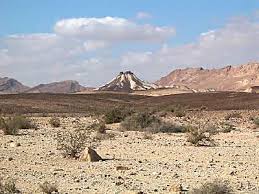
The two reading this morning focus on the wilderness – The first the Old Testament – the Israelites remember their journey from egypt to the promise land which we know included time spent in the wilderness and then in the New testament we see Jesus directly after his baptism being brought into the wilderness before his ministry

The wilderness is seen as somewhere where one does not want to be, somewhere where there is danger, uncertainty and where the individual is on their own. For the Israelites centuries before, they trekked through the wilderness not for forty days but for forty years – guided by God, even though they grumbled, they moaned, they obeyed God, they disobeyed him. When they eventually get to the promised land they in their sinful nature were faithful but they also fell away.

In Jesus' wilderness experience we see him being tempted but he was able to withstand the temptation unlike the israelite people who folded under the pressure … creating Golden Calf, moaning about food, leadershship …

In the temptation of Jesus we see three times the devil tries to out smart Jesus – The first is quite a physical
temptation – you're hungry … go on change the stone into a loaf.
Which doesn't seem an unreasonable request … he has already spent 40 days fasting but actually Jesus knew that there is more to life than the physical things of life.

Then there is the question of worship – Jesus worshiping satan … could you imagine the consequences of that? Worship … what we give our everything to is so important.

Then there is question of showmanship and fame … Jesus wasn't going to create a spectacle

A few things from Jesus' temptations to look at …

firstly he knew his Bible … this might seem a bit obvious … he is God's Son afterall …of course he knew his Bible ... Well yes he is but it was in his Childhood that Jesus learnt the things of God – In Chapter 2 of Luke's Gospel there is a wee verse which I Love … Jesus grew in wisdom and stature and in favour with God and men. He was in the synagogue each week.

Last tuesday the Rector and myself were away at the Diocesan Clergy Quiet day, (an oxymoron??)where the Bishop of our link diocese Albany was leading us through the devotions … one thing he said which jumped out at me... Jesus the Son of God placed immense importance of coming along week by week to the place of worship … which got me thinking about … did he enjoy going?, what about sermons … did the preachers always get it right when he was sitting in the congregation?,
what did he think about the people leading … surely he could have done better himself! ... However it went what we do know is that he had a sure grasp of what is right and what was wrong in God's law from what was said in worship and what he studied at home.

What we see of Jesus' life and ministry from the gospels is only the tip of the iceberg of all that went on in his life, like us what we present to each other each sunday, or to our friends and our work collegues during the week is only a very small percentage of what is going on in our lives, or has been in our past.

Jesus' foundation was sure, Luke spends a few chapters outlining his background, the things that are below the waterline in Jesus' life so that when the wilderness experience comes he has the resources to draw upon. When he is alone, when he is at his most vulnerable he knows who he is and what resources are important.

This is crucial.

In life we prepare for lots of things:
In case of thieves we put in alarms
In case of something happening to our cars and homes we put in insurance
In case of fire we put in smoke alarms
In case of unexpected visitors we pack our cupboards full of food

How are we going to cope for wilderness times?
– By wilderness I mean times when
somewhere where one does not want to be,
somewhere where there is danger,
uncertainty and where the individual seems completely on their own.

In our world today, when we look around at the context in which we are living, so many people are searching for meaning, searching for “the promised land” of happiness. This promised land for some is thought to be the next high, the next club, the next job promotion but actually we as Christians know that peace, that promised land can only be found in a relationship.

As we walk through, as the psalmst puts it … through the valley of the shadow of death, or through the tough times wether it be illness or other types of trial whatever that may be… what resources do you or I have to call upon to sustain us, to protect us.

I have mentioned before in sermons the image of the iceberg where only the tip of it shows ... 50%-99% is below the waterline. In our lives it is the things that we put into place below the waterline as Christians are important and will dictate how we respond and cope with the wilderness times when they arrive in our lives.
The first thing in our relationship with God – do we have one, do we trust in that relationship, do we prioritise it? Prayer for others, for ourselves are we prepared to ask for prayer?,

Then our reading of the Bible – do we know what is in its covers? Are we prepared to study it? Are we prepared to ask questions about what we read? Why not get together with a few friends and study it together? Why not come to our parish Bible study on a wednesday evening?

Then there is coming to church – do we enjoy coming to church? Getting involved in the church community is so important, for fellowship, for connecting with others, when you come to church what are you taking away with you? One of the things I a certainly very keen and open for is people to chat about the readings, I'm very happy to chat to anyone during the week about things I have spoken about on Sunday's from the pulpit.

We also need to rest in the promises in the words of scripture:
New Living Translation (©2007)
The temptations in your life are no different from what others experience. And God is faithful. He will not allow the temptation to be more than you can stand. When you are tempted, he will show you a way out so that you can endure
1 corinthians 10:13

2 Peter 2:9 then the Lord knows how to rescue the godly from temptation,


Each one of us, I am sure can identify areas in our lives where we fail, where we again and again would love to get sorted out. Also we may know others perhaps in our own families or friends who we have a desire to see get sorted out. I wonder this lent when we ask the question how are you are we prepared to make the change required- are we strong enough to make the changes ourselves, to remove whatever we may be going through and run with perseverance the race laid out before us.

What priorities do we need changed? , What preparations are we making for the wilderness times?

In Hebrews Chapter 4 we read
14Therefore, since we have a great high priest who has gone through the heavens,[e] Jesus the Son of God, let us hold firmly to the faith we profess. 15For we do not have a high priest who is unable to sympathize with our weaknesses, but we have one who has been tempted in every way, just as we are—yet was without sin. 16Let us then approach the throne of grace with confidence, so that we may receive mercy and find grace to help us in our time of need.


In time of help and need let us cling to Jesus, But also let us remember the God is not just there for the wilderness but also whilst we are dwelling in the promised land.


Let us pray